Best Auto Apply Tools for Staffing Agencies
A staffing agency does not need another applicant tracking system. It needs a way to get consenting candidates into employers’ application forms at volume, without a coordinator retyping the same work history forty times a day. This guide covers the three categories of tool that claim to do that, which one fits which agency, and the questions worth asking before you sign.
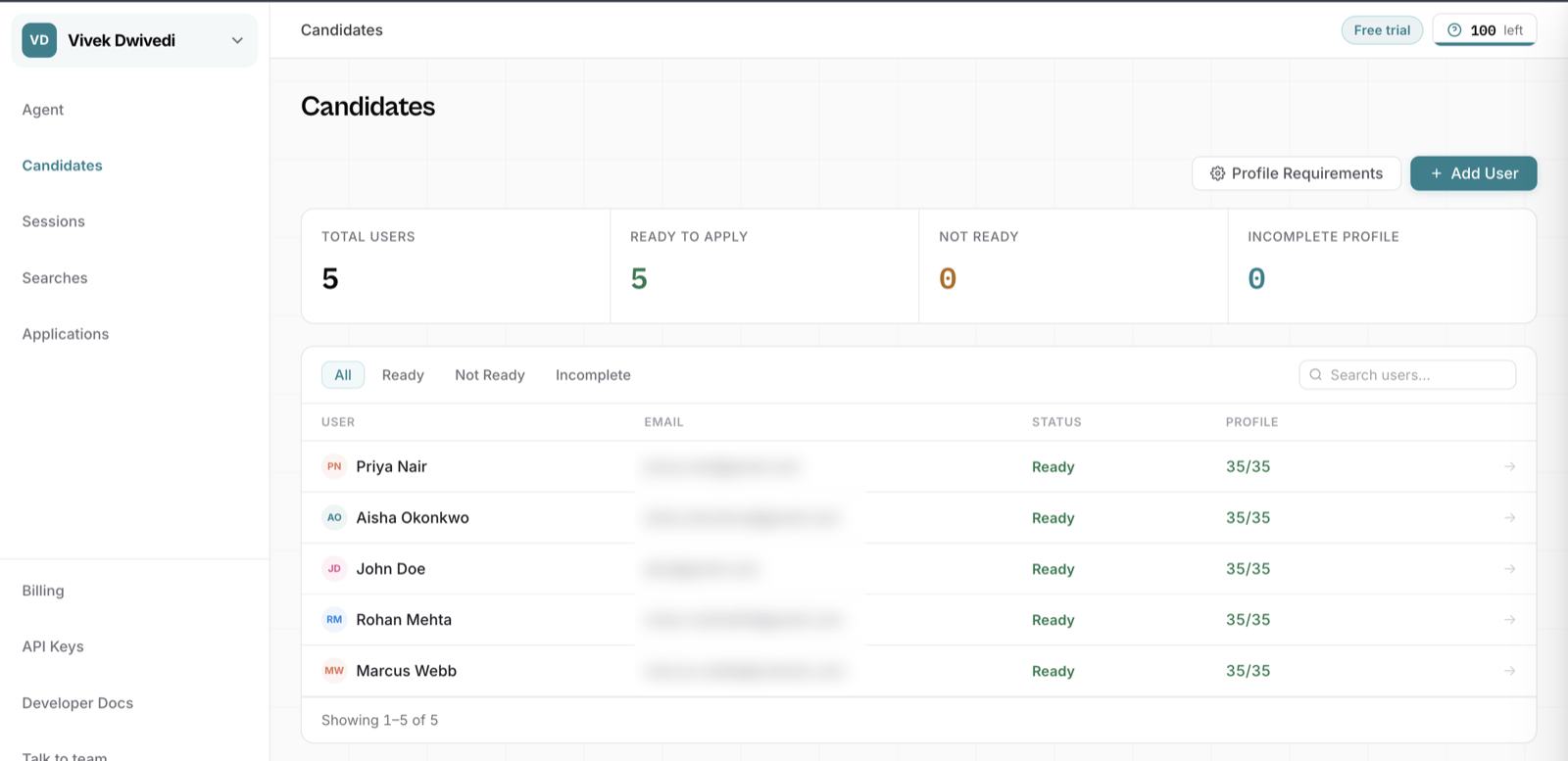
What staffing agencies actually need
Most buyer guides for this category review recruiting platforms — Bullhorn, iCIMS, Fountain and similar. Those are good at managing candidates inside your business. They do not submit anybody into an employer’s form. If that submission step is the bottleneck, you are shopping in the wrong aisle, and three requirements matter more than feature counts.
Volume without getting candidates blocked
Throughput is the reason to automate, and it is also the fastest way to cause damage. Submitting fifty applications to one employer in a minute gets the candidate filtered, not hired, and it can get your agency’s traffic blocked. Pacing per employer should be a feature the vendor describes unprompted.
Coverage across the systems your clients run
You do not choose which applicant tracking system an employer uses. Coverage is therefore not a nice-to-have; a tool that handles ten systems and misses the one your biggest client runs is worth very little to you. Ask for the named list.
Proof that an application actually landed
An automated submission that silently fails is worse than no submission, because you bill for it and your candidate waits for a reply that will never come. Whatever you buy should return a verifiable receipt, not just a success flag.
The three categories of tool
Almost everything marketed as auto apply software falls into one of three groups. They solve genuinely different problems, and the common mistake is buying from the wrong group.
Recruitment automation platforms
Full systems for running an agency: sourcing, CRM, scheduling, screening and reporting. Excellent at the parts of the job that happen inside your walls. They automate your workflow, not the employer’s application form. Buy one if your problem is pipeline management.
Candidate-side auto apply extensions
Browser extensions a jobseeker installs to fire off applications for themselves. Cheap and fine for one person. They rarely survive agency use: no central candidate records, no per-client reporting, no audit trail of consent, and nothing to integrate with.
Job application APIs
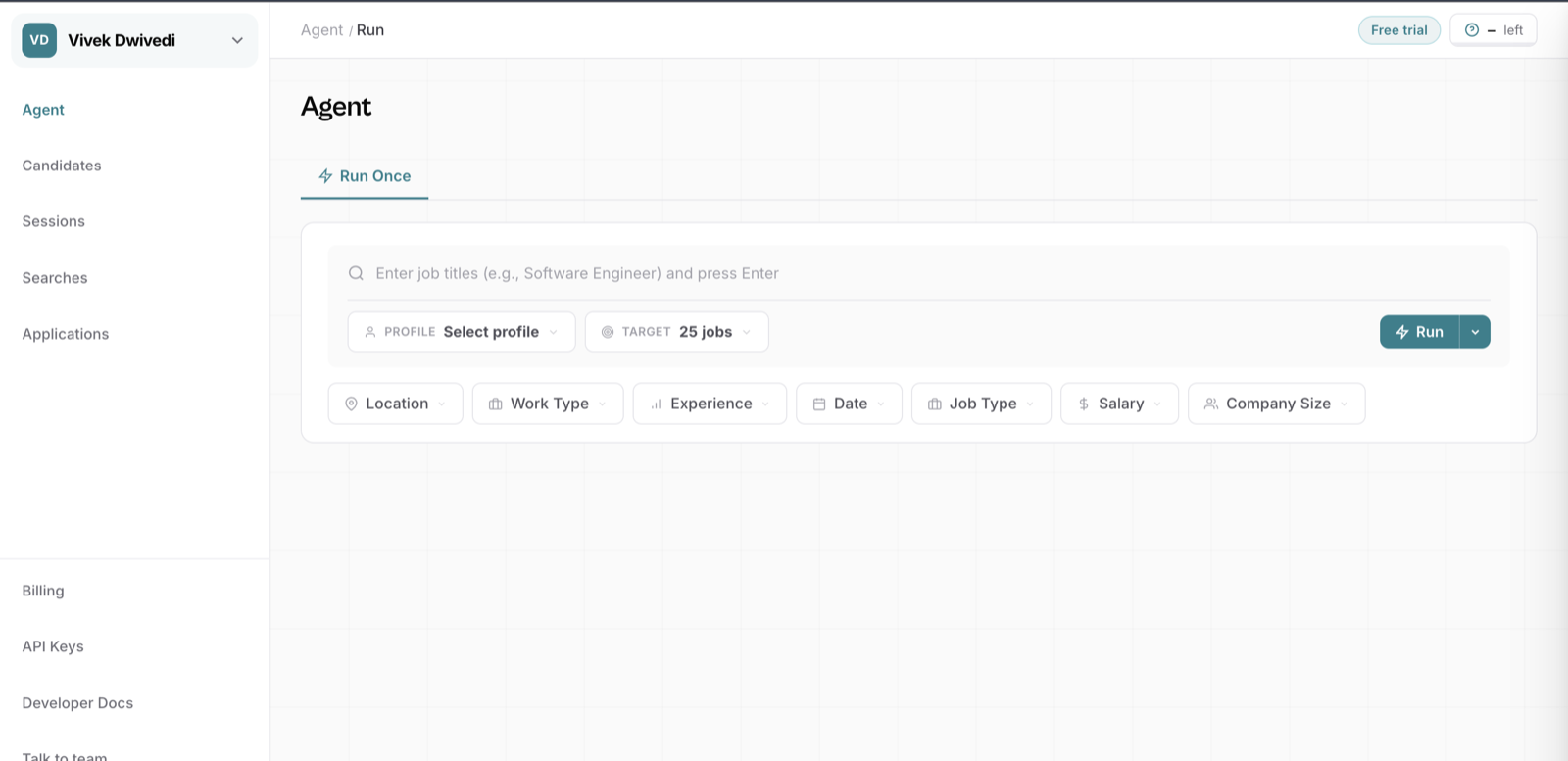
An endpoint you call with a job URL and a candidate profile; the service completes and submits the employer’s form and returns a confirmation. This is the category that fits bulk candidate submission, and it is the one we build — see how the job application API works.
Questions to ask before you sign
These are the questions that separate vendors quickly. Ask every one of them, and prefer the vendor who answers with numbers over the one who answers with adjectives.
Coverage and reliability
What is the success rate on each named system, not blended? What is the median time to submit, and uptime over the last six months? Which system performs worst, and why? A vendor who will not name their weakest number is telling you something.
Compliance and consent
How is candidate consent captured and stored per application? How are submissions paced per employer? What happens at a CAPTCHA — is it handed back to the candidate, or defeated? Your agency carries the reputational risk of that answer, not the vendor.
Verification and data
Beyond a screenshot, how is submission confirmed? Can applications carry the candidate’s own email so the employer’s reply reaches them directly? Where is candidate data stored, how long is it kept, and can you delete a candidate on request?
Choosing between build and buy
Agencies with engineers often ask whether to build this themselves. The first adapter is genuinely easy. The difficulty is that application forms change without notice, without versioning and without a deprecation window, so the work never finishes.
When building makes sense
You submit to a small, stable set of employers, you already run browser automation in production, and you have someone who can fix a broken adapter the morning it breaks.
When buying makes sense
Your clients run many different systems, your volume is growing, and you would rather your engineers worked on something that differentiates the agency. The maintenance burden is the product you are actually buying.
How to pilot either option
Run thirty to fifty real, consented applications against your own candidates and your own clients’ postings. Judge on results from your data, not a vendor’s. Any serious vendor will agree to this, and several will suggest it first.
Frequently asked questions
What is an auto apply tool?
Software that submits job applications on a candidate's behalf instead of a person filling in each form by hand. For a staffing agency the useful version works in bulk: you hold the candidate's details once, and the tool completes and submits the employer's application form across many postings.
Do auto apply tools work with every applicant tracking system?
No, and any vendor claiming otherwise is worth a second look. Each applicant tracking system is a separate form engine with its own fields, screening questions and quirks. Ask for a named list of supported systems and the success rate on each, rather than a single blended number.
Is auto-applying to jobs allowed?
Submitting a real application for a real, consenting candidate is ordinary use. The lines worth not crossing are applying without the candidate's knowledge, misrepresenting their details, and defeating anti-bot controls. Record consent per application and keep submissions paced per employer.
What happens when an application form shows a CAPTCHA?
The right behaviour is to stop and hand the challenge back to the candidate rather than attempt to defeat it. Ask any vendor this question directly — the answer tells you how they treat anti-bot controls generally, which is a good proxy for how they will treat your agency's reputation.
How do I know an application was actually submitted?
A screenshot of the confirmation page is evidence a human can check, but it should not be the only check. Ask whether the tool captures an application ID, detects the ATS confirmation response, or routes the employer's confirmation email to the candidate's own inbox.
Should a staffing agency buy a tool or build this in-house?
Building one adapter is a weekend. Keeping fifteen working is a standing commitment, because application forms change without notice, versioning or a deprecation window. The honest test is whether you want an engineer owning that maintenance permanently.
Submitting candidates at volume
We run the submission half: one endpoint, one candidate schema, and a confirmation back for every application. If you are weighing up the best auto apply tools for staffing agencies, the fastest way to compare is a small paid pilot against your own candidates.