Best AI Job Application Automation Tools
TL;DR
AI job application tools help job seekers automate repetitive applications, tailor resumes for each role, and apply to multiple listings faster. Instead of manually filling out forms again and again, candidates can use AI to optimize resumes, autofill applications, and track submissions in one place.
Most tools in this category focus on individual users. They typically rely on browser-based automation, resume parsing, and bulk apply features to increase speed and efficiency. Some also provide job tracking dashboards or specialize in niche job discovery such as remote or flexible work opportunities.
However, when it comes to platforms, job boards, and enterprises, the needs are different. They require scalable, secure, and system-level automation, not just faster clicking.
That’s where API-based infrastructure likeBoring Project comes in. Instead of automating applications at the browser level, it enables job applying through structured APIs. This allows platforms to integrate automated job submission across multiple ATS systems without building and maintaining those integrations themselves.
In short:
AI tools help individuals apply faster.
API infrastructure helps platforms apply at scale.
Quick Comparison: Best AI Job Application Automation Tools (2026)
Category Insights
1. Browser-Based Auto-Apply Tools
Platforms like JobCopilot, Loopcv, and LazyApply focus on automating job submissions through browser-level interactions.
They prioritize speed and volume but are not built as enterprise APIs.
2. AI Resume & Workflow Optimization Tools
AIApply and CareerFlow focus more on resume enhancement, job tracking, and workflow management rather than deep ATS infrastructure.
3. Niche Job Boards
4dayweek.io specializes in job discovery for specific work models, without automation capabilities.
4. Autofill Assistants
Simplify Jobs reduces repetitive form filling but does not function as application infrastructure.
Quick Recommendations by Job Role
Not every job seeker needs the same kind of automation. The right tool depends on your goals, industry, and application volume.
Below is a quick breakdown based on job role and workflow needs.
Software Engineers
Software engineers often apply to multiple roles across different platforms and need resume customization for each tech stack.
Best Fit Tools:
Mass-apply automation platforms
AI resume optimization tools
Autofill-heavy application assistants
Why:
Engineering roles frequently require tailored resumes that highlight specific languages, frameworks, or systems experience. Tools that combine resume optimization with high-volume apply automation help engineers apply efficiently while maintaining relevance.
Students & Fresh Graduates
Early-career candidates typically need help with resume quality, cover letters, and structured job tracking.
Best Fit Tools:
AI resume and cover letter generators
Resume scoring and improvement tools
Application tracking dashboards
Why:
Students benefit more from resume optimization and workflow organization than from pure volume automation. Tools that provide guidance, templates, and structured tracking improve interview conversion rates.
Sales & Marketing Professionals
Sales and marketing candidates often rely on high-volume outreach and rapid application cycles.
Best Fit Tools:
High-volume job automation platforms
LinkedIn-based application tools
CRM-style job tracking dashboards
Why:
These roles are numbers-driven. Speed and reach matter. Automation tools that allow quick application submission while tracking follow-ups are especially useful.
Remote Job Seekers
Remote candidates prioritize flexibility, global opportunities, and niche job boards.
Best Fit Tools:
Remote-first job boards
Flexible work platforms
Resume optimization tools for distributed roles
For example, niche boards like 4dayweek.io specialize in flexible and reduced-hour work listings.
Why:
Remote applicants often target specialized listings rather than high-volume mass applications. Discovery tools combined with resume optimization perform better than blind automation.
Enterprises & Job Platforms
This category is completely different from individual job seekers.
Job boards, career platforms, and enterprise HR systems need:
Programmatic job application APIs
Multi-ATS compatibility
Resume payload normalization
Webhook-based tracking
Developer documentation and SDKs
Instead of browser-based automation, enterprises require API-driven job application infrastructure.
Platforms likeBoring Project provide job apply APIs that allow systems to integrate automated applications at scale without building custom ATS integrations internally.
Related: Know more aboutBoring Project
What Does “AI Job Application Automation” Actually Mean?
AI job application automation refers to the use of artificial intelligence and software systems to streamline, optimize, and automate parts of the job application process.
Instead of manually searching, customizing, and submitting applications one by one, AI-powered systems help candidates, and in some cases platforms, automate repetitive tasks such as resume tailoring, form filling, job matching, and application tracking.
At a high level, AI job application automation can include four major layers:
Resume optimization
Automated job submissions
Application tracking and workflow management
Programmatic API-based application infrastructure
Resume Optimization Automation
Resume optimization automation uses AI to tailor resumes for specific job descriptions.
These systems can:
Analyze job postings
Extract key skills and keywords
Suggest resume improvements
Rewrite bullet points for better alignment with ATS systems
The goal is to increase resume relevance and improve the chances of passing automated screening filters.
Auto-Apply Across Job Boards
Auto-apply tools automate the submission of applications across multiple job boards.
Instead of manually filling out repetitive forms, candidates can:
Submit applications in bulk
Autofill application forms
Apply to multiple listings quickly
This layer focuses on speed and volume. Most auto-apply systems operate at the browser level and are designed for individual users rather than enterprise infrastructure.
Job Tracking & CRM for Candidates
Job tracking tools act like a personal CRM for job seekers.
They help candidates:
Track where they applied
Monitor interview stages
Organize follow-ups
Analyze response rates
This layer does not necessarily automate submission but improves organization and conversion tracking.
Programmatic Application via APIs
The most advanced layer of AI job application automation involves programmatic job applying through APIs.
Instead of automating clicks in a browser, API-based systems:
Submit applications directly through structured endpoints
Normalize workflows across multiple ATS systems
Provide webhook-based status updates
Enable large-scale automation for platforms and enterprises
This approach moves beyond individual convenience and into infrastructure-level automation.
What is AI job application automation?
AI job application automation is the use of artificial intelligence and software tools to streamline resume optimization, automate job submissions, track applications, and, in some cases, programmatically submit applications through APIs. It reduces manual effort and increases application efficiency for both individuals and platforms.
How AI Job Application Tools Work
AI job application tools automate different parts of the job search process using software automation, resume intelligence, and workflow tracking systems.
While many tools look similar on the surface, they operate in fundamentally different ways, especially when comparing browser-based automation with structured API-based systems.
Understanding how they work helps you choose the right level of automation for your needs.
Browser Automation vs Structured APIs
Most AI job tools rely on browser automation.
Browser-based systems:
Simulate user actions
Autofill application forms
Click “Apply” buttons automatically
Operate directly on job board interfaces
This method works well for individual job seekers who want to automate repetitive submissions. However, it depends heavily on UI layouts and can break when job boards update their interface.
Structured API systems work differently.
API-based automation:
Submits job applications through backend endpoints
Does not rely on page layouts or UI clicks
Uses normalized data formats
Supports scalable and reliable automation
Browser automation is user-level.
API automation is infrastructure-level.
Resume Parsing & Optimization
AI job tools analyze resumes using parsing engines and natural language processing.
These systems:
Extract structured data from resumes
Identify missing keywords from job descriptions
Suggest skill alignment improvements
Rewrite bullet points for better ATS compatibility
This is known as AI resume tailoring. The goal is to increase the likelihood of passing automated screening filters used by Applicant Tracking Systems.
Resume optimization does not submit applications on its own, it improves application quality before submission.
ATS Form Autofill
Many job applications require candidates to manually re-enter resume information into structured fields.
ATS form automation reduces this repetition by:
Parsing resume data
Mapping fields automatically
Autofilling online forms
Submitting structured candidate data
This layer saves time and reduces user fatigue, especially when applying to multiple listings.
However, autofill systems are still dependent on front-end forms unless backed by structured API integrations.
Application Tracking Dashboards
After applications are submitted, tracking becomes critical.
Modern AI job tools often include dashboards that:
Record submitted applications
Track interview stages
Monitor response rates
Organize follow-ups
These dashboards function like a lightweight CRM for candidates, helping them manage high-volume job searches more effectively.
Tracking systems do not automate applications directly, but they improve visibility and conversion rates.
How the Layers Fit Together
AI job application tools typically combine:
Resume optimization
Application submission automation
ATS form autofill
Application tracking
Some tools focus on one layer.
Others attempt to combine multiple layers.
The most advanced systems extend automation beyond individuals by using structured APIs to handle applications programmatically at scale.
AI job application tools work by combining resume optimization, ATS form automation, bulk job apply systems, and application tracking dashboards. Some rely on browser automation, while others use structured APIs for scalable and reliable job submission.
Best AI Job Application Automation Tools
AI job automation tools vary in focus, some emphasize bulk applications, others prioritize resume optimization or workflow tracking. Below is a structured breakdown of the most recognized platforms in this space.
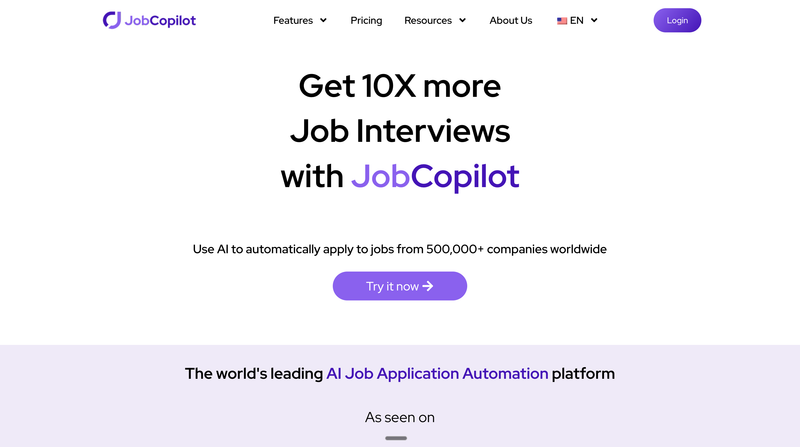
JobCopilot: Multi-Platform Apply Automation
Core Functionality
JobCopilot automates job discovery and application submission across multiple job boards. It is designed to help users apply to jobs in volume with minimal manual effort.
Ideal User
Active job seekers applying to many roles per week and prioritizing speed.
Strengths
Multi-site job application automation
Automated job matching
Reduced repetitive form filling
Limitations
Relies on browser-based workflows
Not built for enterprise API integrations
Limited advanced analytics
Pricing Model Overview
Typically subscription-based with tiered plans depending on application volume and feature access.
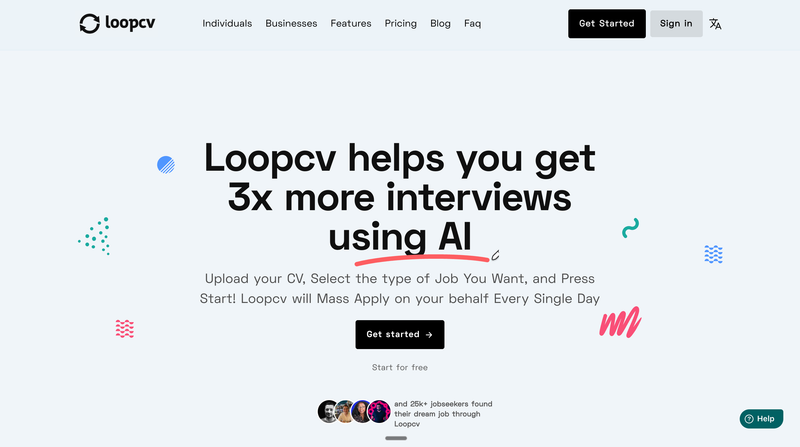
Loopcv: Bulk Job Application Automation
Automated Job Matching
Loopcv automatically searches for jobs based on user-defined filters and criteria.
Mass Application Sending
It supports bulk applications to matching listings, helping users scale outreach quickly.
Resume Targeting
Users can configure different resumes or targeting rules depending on job type.
Best For
Candidates prioritizing volume-based job search strategies.
Limitations
Individual-focused platform
Limited ATS normalization
Not API-first infrastructure
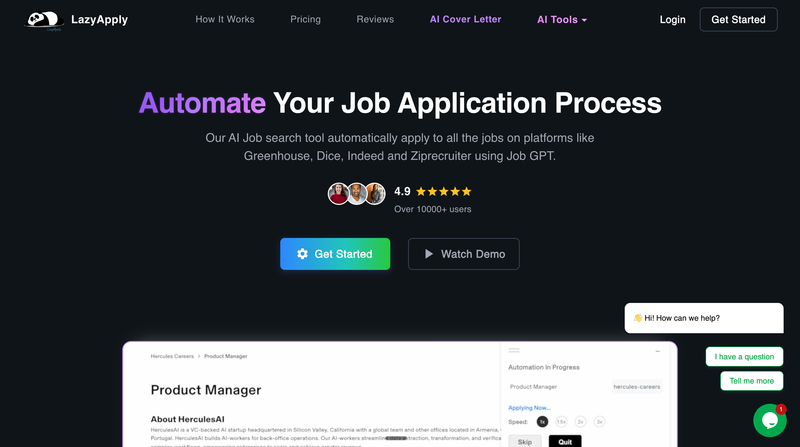
LazyApply: Fast One-Click Apply
Browser-Based Automation
LazyApply operates through browser extensions that automate job submissions on supported platforms.
LinkedIn + Indeed Compatibility
Primarily known for automation on major job boards that support simplified application workflows.
Strengths
Quick setup
High-speed application submission
Designed for ease of use
Limitations in Tracking
Limited post-application analytics
Dependent on front-end UI stability
Not enterprise-ready
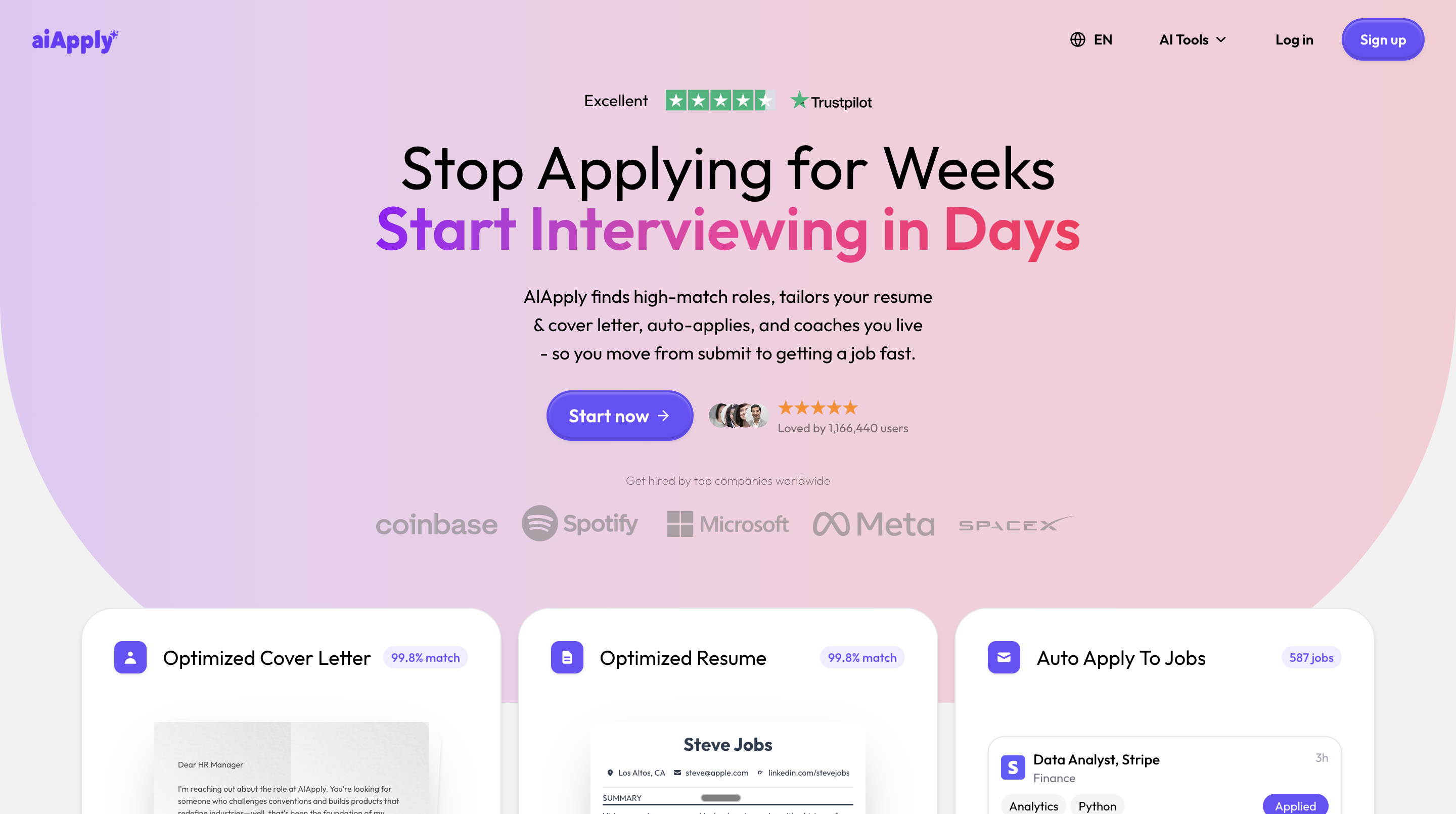
AIApply: Resume + Apply AI Optimization
AI Resume Rewriting
AIApply uses AI to enhance resume content, align it with job descriptions, and improve ATS compatibility.
Cover Letter Generation
Generates tailored cover letters based on role requirements.
Apply Automation Blend
Combines resume optimization with job application support features.
Ideal User
Candidates seeking resume improvement alongside apply assistance.
Limitations
Consumer-centric focus
Limited multi-ATS backend infrastructure
Not designed as a developer API platform
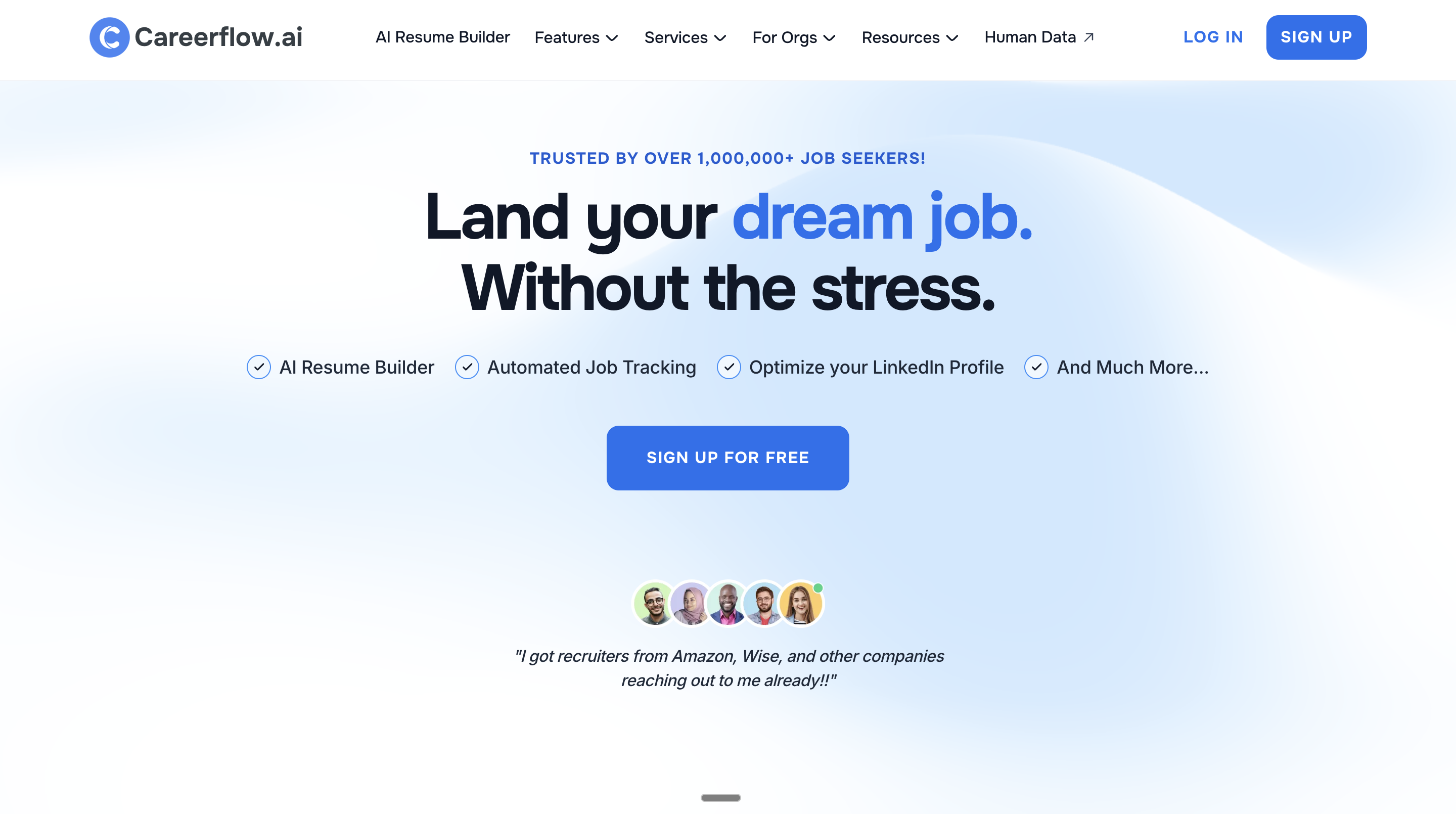
CareerFlow: Application Workflow Manager
Application CRM
CareerFlow provides structured dashboards to manage job applications and interview stages.
Resume Improvement
Includes resume scoring and feedback tools to improve alignment with job roles.
Job Tracking Analytics
Offers performance tracking to help candidates monitor application success rates.
Best For
Job seekers who want organized, structured job search management rather than bulk automation.
Limitations
Less emphasis on automated mass applying
Primarily workflow-focused
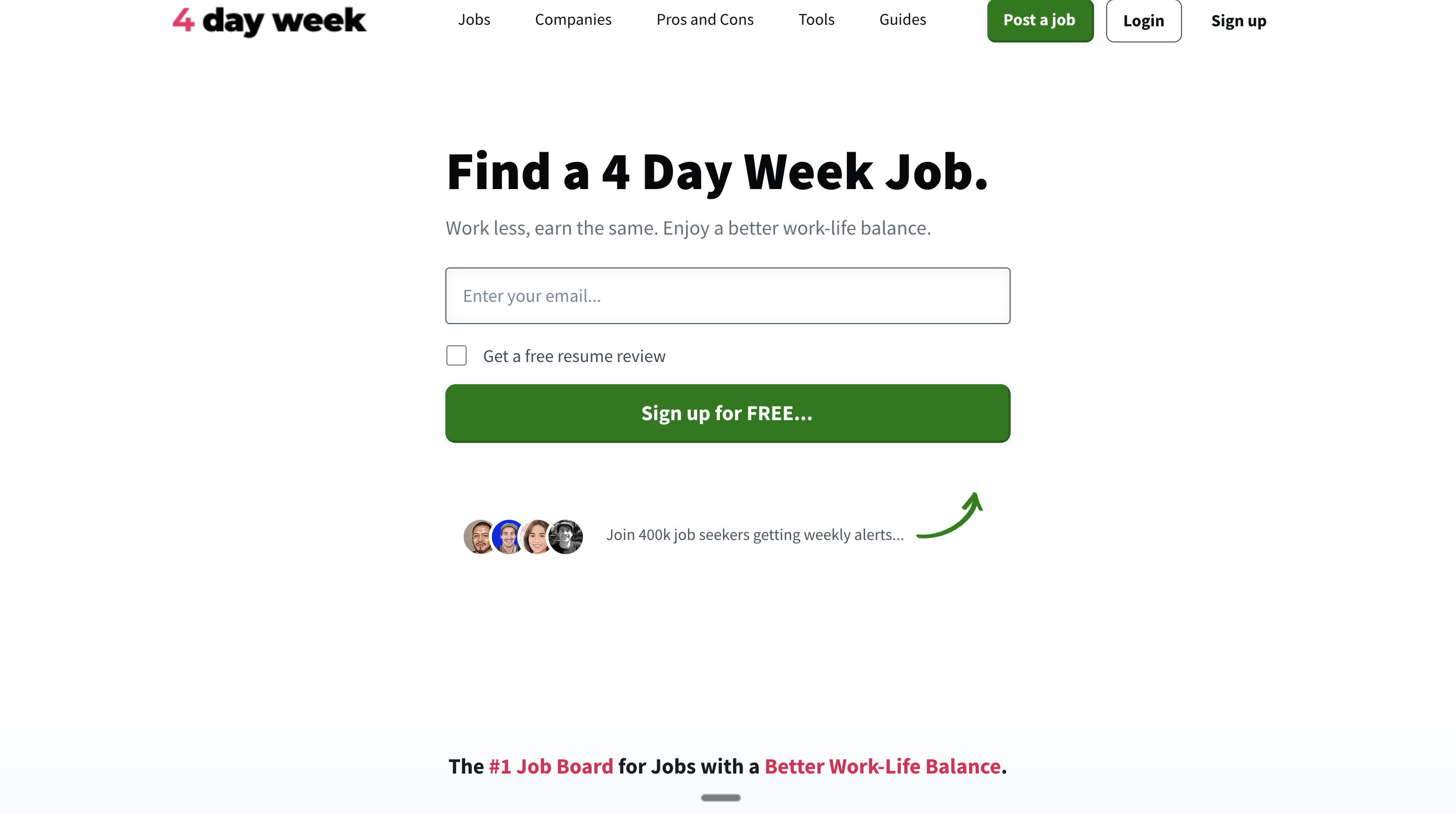
4dayweek: Niche Job Discovery Platform
4-Day Workweek Focus
Specializes in curated listings for reduced-hour and flexible work models.
Remote-First Listings
Emphasizes remote-friendly and flexible job opportunities.
Not an Apply Automation Engine
4dayweek.io is a discovery platform, not an automated job application tool.
Best For
Candidates prioritizing lifestyle-focused job searches over application volume.
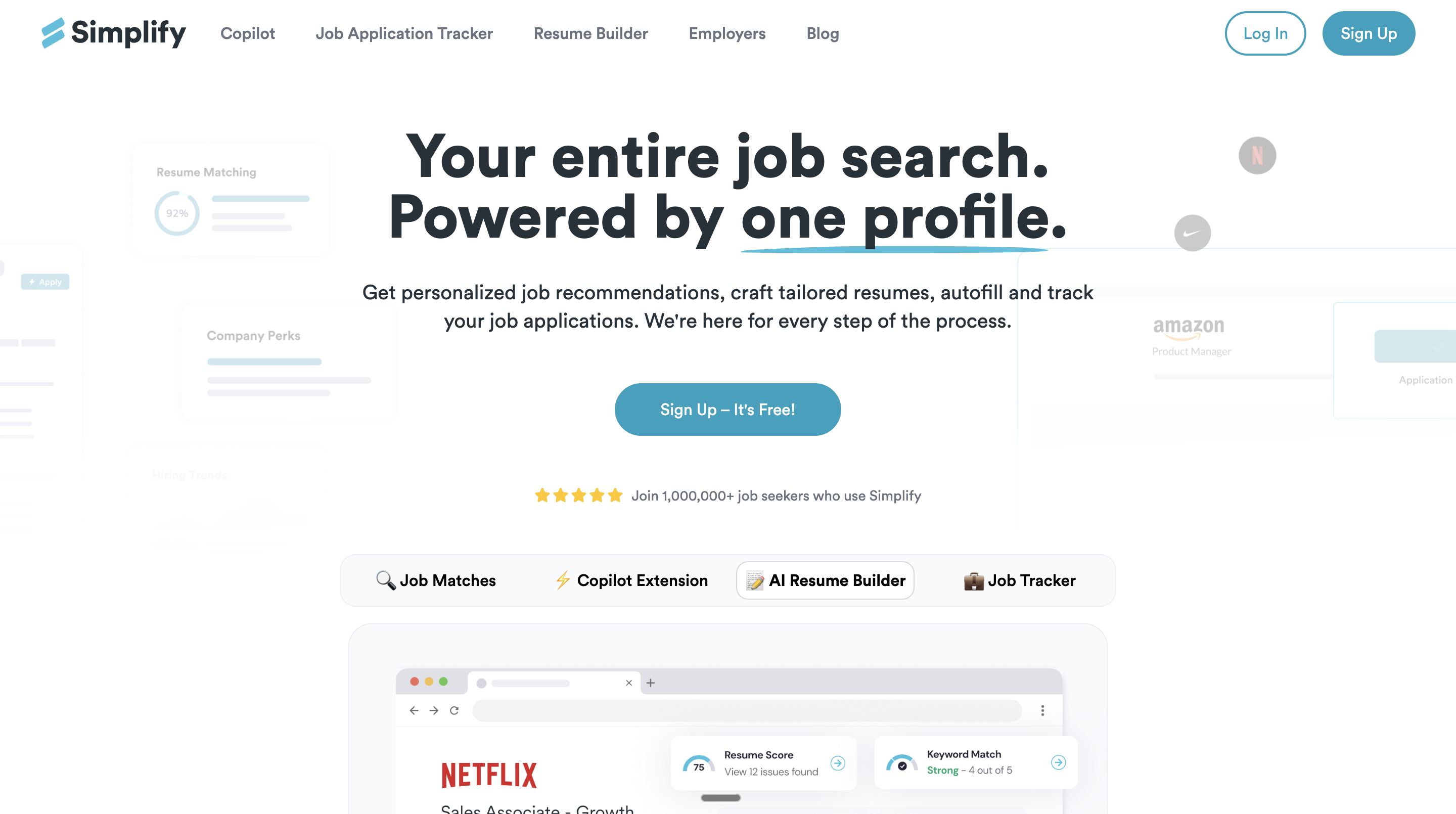
Simplify Jobs: Form Autofill & Resume Autofill
Autofill Forms Quickly
Simplify Jobs helps users automatically populate job application fields using resume data.
Application Tracking
Includes a dashboard to track submitted roles and interview progress.
Resume Parsing
Extracts structured data from resumes to reduce manual entry.
Strengths
Time-saving form automation
Clean user workflow
Student-friendly design
Limitations
Not API-based infrastructure
Limited enterprise integration capabilities
Summary Snapshot
JobCopilot and Loopcv focus on bulk automation.
LazyApply emphasizes speed-based browser automation.
AIApply blends resume optimization with apply support.
CareerFlow prioritizes job tracking and workflow management.
4dayweek.io focuses on niche job discovery.
Simplify Jobs reduces repetitive form filling.
All are primarily built for individual job seekers rather than enterprise-grade job apply infrastructure.
Limitations of Most AI Job Application Tools
AI job application tools can significantly reduce repetitive work for individual candidates. However, most platforms share structural limitations that prevent them from operating as scalable infrastructure.
Understanding these limitations helps clarify when browser-based automation works — and when more robust, API-driven systems are required.
Browser Dependency
Many AI job application tools rely on browser automation to simulate user actions.
This means they:
Click buttons on job boards
Autofill web forms
Submit applications through front-end interfaces
Because they depend on UI layouts, even small design changes on job boards can disrupt automation. This makes them more suitable for individual users than for mission-critical enterprise workflows.
Fragile Workflows
Browser-driven systems are inherently sensitive to:
Interface updates
Captcha changes
Multi-step application flows
Unexpected validation fields
When job boards or ATS systems update their workflows, automation tools may require manual fixes or updates. This creates instability for large-scale operations.
No Enterprise-Grade APIs
Most AI job automation tools are built for consumers, not developers.
They typically:
Do not expose structured job apply APIs
Do not offer SDKs or developer documentation
Cannot be embedded into other platforms
Without enterprise-grade APIs, these tools cannot serve as backend infrastructure for job boards, HR systems, or hiring platforms.
Limited ATS Normalization
Applicant Tracking Systems vary widely in:
Required fields
Resume parsing rules
Submission formats
Validation logic
Consumer-focused automation tools generally interact with forms visually rather than normalizing ATS requirements at the backend level. This limits reliability and scalability across multiple systems.
Lack of Platform-Level Integration
AI job tools are typically standalone applications. They are not designed to:
Power job boards
Integrate with enterprise hiring systems
Provide webhook-based application status updates
Support structured analytics at scale
This limits their usefulness for companies building hiring platforms or career products.
What are the limitations of AI job application tools?
Most AI job application tools rely on browser automation, making them dependent on UI changes and fragile workflows. They typically lack enterprise-grade APIs, multi-ATS normalization, and platform-level integration capabilities, limiting their scalability for job boards and enterprise systems.
The Infrastructure Gap: Why Job Boards & Enterprises Need More
Most AI job application tools today are designed for individual job seekers. They help automate form filling, speed up applications, and optimize resumes.
However, job boards, hiring platforms, ATS vendors, and enterprise HR systems operate at a completely different scale.
They need infrastructure, not browser automation.
Enterprise-level job platforms require:
Scalable API-based applying
Multi-ATS normalization layers
Secure and compliant data handling
Webhook-based status tracking
Developer documentation and SDK support
Browser automation may work for individuals applying to 50 jobs.
It does not work for platforms processing thousands or millions of applications.
This is the infrastructure gap.
There is job search infrastructure.
There is resume optimization infrastructure.
But the job application layer has historically lacked a standardized API ecosystem.
That is where modern job apply infrastructure becomes critical.
Boring Project: API Infrastructure for Automated Job Applications
Unlike consumer-focused automation tools,Boring Project is designed as backend infrastructure for platforms and enterprises.
It does not automate clicks.
It automates systems.
Boring Project provides:
Job apply APIs for structured application submission
ATS abstraction layers that normalize workflows
Resume customization APIs for per-role payload formatting
Webhook-based application status updates
Enterprise-level scalability and reliability
Instead of interacting with job board interfaces visually,Boring Project operates through structured API endpoints that abstract the complexity of ATS systems.
This allows platforms to integrate once and scale across multiple application targets.
Positioning Line
Consumer tools automate clicks.
Boring Project automates infrastructure.
How Job Search Tools & Enterprises Can Integrate Boring Project
Integration does not require rebuilding existing job discovery systems. Instead,Boring Project enhances them by adding a structured application layer.
Add “Apply via API” to Existing Job Boards
Job boards can embed an “Apply via API” option directly into listings.
Instead of redirecting users to external forms, applications can be submitted programmatically through structured APIs, improving user retention and completion rates.
Reduce ATS Engineering Costs
Maintaining custom integrations with multiple Applicant Tracking Systems is expensive and time-consuming.
Boring Project centralizes this complexity into a single API interface, reducing the need to maintain separate ATS-specific logic.
Avoid Maintaining Custom ATS Integrations
ATS systems differ in validation rules, required fields, and submission formats.
With an abstraction layer, enterprises integrate once and let Boring Project handle normalization across systems.
Build Native Apply Features Into Products
Career platforms, AI job assistants, and hiring marketplaces can embed application submission as a native feature instead of relying on external redirects or browser automation.
This improves:
User experience
Application success rates
Platform stickiness
How can job boards automate job applications?
Job boards can automate job applications by integrating structured job apply APIs that submit applications programmatically across ATS systems. This removes manual form handling and enables scalable, backend-driven automation.
Cost Savings & ROI for Enterprises
Enterprise adoption is not just about automation, it is about measurable cost reduction.
Avoid Building 10+ ATS Integrations
Developing and maintaining separate integrations for multiple ATS systems can require significant engineering resources.
A unified API layer reduces this burden.
Reduce Engineering Overhead
Instead of tracking UI changes, captcha updates, or workflow adjustments, enterprises rely on stable API-based architecture.
This lowers long-term maintenance costs.
Improve User Retention With Native Applying
When users apply directly within a platform instead of being redirected externally, drop-offs decrease and engagement improves.
Track Apply Success Rates
Structured application status tracking enables performance analytics, including:
Submission success rates
ATS-specific failure patterns
Conversion metrics
This transforms job applying from a black box into a measurable system.
How to Choose the Right AI Job Application Tool
Choosing the right tool depends on scale, use case, and technical requirements.
Checklist
Individual vs Enterprise Use
Are you applying personally, or powering a platform?
Browser Automation vs API Infrastructure
Do you need speed, or system-level reliability?
ATS Support
Does the tool normalize multiple ATS workflows?
Resume Customization
Can resumes be tailored per job automatically?
Analytics & Tracking
Is application performance measurable?
Data Security
Are structured, secure data workflows supported?
This framework helps determine whether a consumer tool or infrastructure solution is appropriate.
Frequently Asked Questions (FAQ)
Q1: What is the best AI tool to automate job applications?
The best AI tool depends on your goal. Individual job seekers may benefit from resume optimization and bulk apply tools, while enterprises require API-based job apply infrastructure for scalable automation. Choosing between browser-based tools and structured APIs depends on volume, reliability, and integration needs.
Q2: Are AI job application tools safe to use?
Most reputable AI job application tools use structured workflows to protect user data. However, browser-based automation may expose credentials or rely on UI interactions. Enterprise-grade job apply APIs typically offer more secure and controlled data handling environments.
Q3: Do auto-apply tools work with all ATS systems?
No. Many auto-apply tools rely on front-end form automation and may not support all ATS systems reliably. Multi-ATS normalization through backend APIs provides more consistent compatibility across platforms.
Q4: Can I use AI to apply to hundreds of jobs per day?
Yes, many AI job automation tools allow bulk job applications. However, applying in high volume does not guarantee better outcomes. Resume relevance and ATS compatibility remain critical for success.
Q5: What is the difference between job automation tools and job apply APIs?
Job automation tools typically operate at the browser level for individuals. Job apply APIs operate at the backend level, allowing platforms and enterprises to submit applications programmatically and at scale.
Q6: Are API-based job application systems better than browser automation?
API-based systems are generally more stable and scalable because they do not depend on front-end UI layouts. They are better suited for enterprise platforms that require reliability and integration flexibility.
Q7: Can job boards integrate automated applying features?
Yes. Job boards can integrate job apply APIs to enable structured application submission directly within their platform, reducing redirects and improving completion rates.
Q8: How does Boring Project help enterprises reduce development costs?
Boring Project centralizes ATS integrations through a unified API layer. This eliminates the need to build and maintain multiple custom integrations, reducing engineering time and operational overhead.
Q9: Is AI job automation ethical and compliant?
AI job automation can be ethical when used responsibly and in compliance with platform terms and data protection standards. Infrastructure-level APIs typically offer more transparent and structured compliance frameworks compared to browser-based automation.